
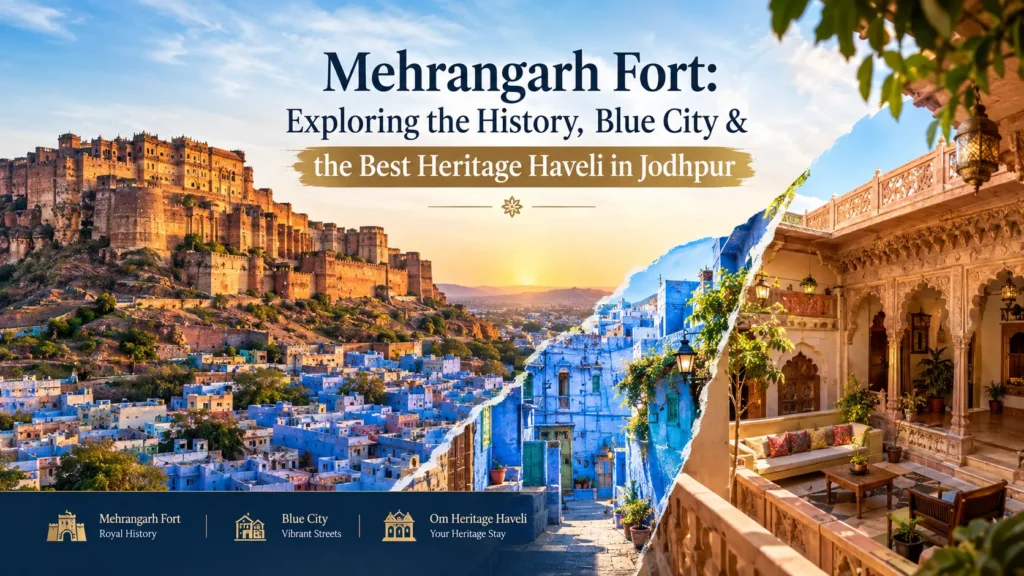
Jodhpur is a city where royal history, traditional architecture and vibrant local culture come together. Known as the Blue City of Rajasthan, it attracts travellers with its blue-painted houses, historic streets, colourful markets and magnificent monuments. At the heart of this heritage experience stands Mehrangarh Fort, one of the most remarkable landmarks of Jodhpur.
For travellers who want to experience this history beyond sightseeing, choosing the right accommodation can make the journey even more memorable. Staying at the Best Heritage Haveli in Jodhpur allows visitors to experience traditional Rajasthani architecture and hospitality while enjoying the comforts of a modern stay.
From the imposing walls of Mehrangarh Fort to the blue lanes of the old city, Jodhpur offers an experience that connects the past with the present. And after a day of exploring, a heritage stay such as Om Heritage Haveli provides an opportunity to continue experiencing the city’s timeless character.
Rising dramatically above Jodhpur, Mehrangarh Fort is one of Rajasthan’s most impressive historic landmarks. The fort stands on a rocky hill approximately 400 feet above the surrounding plain, giving it a commanding view over the city. Its imposing sandstone walls, massive gates, courtyards and richly decorated palaces reflect the architectural and cultural legacy of Marwar.
More than just a defensive structure, Mehrangarh served as a royal residence, centre of administration and important cultural space for the Rathore rulers. Today, its palaces and museum allow visitors to discover different aspects of Jodhpur’s royal heritage.
The story of Mehrangarh Fort is closely connected with the history of Jodhpur and the Rathore dynasty.
Rao Jodha, the Rathore ruler of Marwar, began building the fort in 1459 at a new location south of Mandore. The settlement that developed around the fort eventually became Jodhpur, named
after Rao Jodha. The name Mehrangarh is associated with the Rathore clan’s traditional connection with the sun and is commonly interpreted as the “Fort of the Sun.”
Over the centuries, successive rulers expanded and modified the fort. Its architecture therefore represents different periods of Marwar’s history. Major phases of construction followed the
original foundation, with later rulers strengthening its defensive structures and adding new palaces and buildings.
For centuries, Mehrangarh remained an important centre of power for the Rathores. The fort was not only a military stronghold but also a palace, a place of worship and a centre that supported arts, music and literature.
One of the most fascinating aspects of Mehrangarh Fort is the variety of architecture found within its walls. Since construction and expansion continued across several centuries, visitors can see architectural influences from different periods.
Some of the highlights include:
● Impressive fort gates and defensive walls
● Royal courtyards and palace complexes
● Intricate stone carvings and decorative details
● Traditional jharokhas and screened windows
● Historic period rooms
● Royal collections preserved inside the museum
● Panoramic views across Jodhpur
The Mehrangarh Museum further adds to the experience, with collections that include miniature paintings, arms and armour, textiles, decorative arts and furniture from different periods.
Although Mehrangarh Fort was once a centre of royal power, its role today is very different. The fort has become an important heritage and cultural attraction where visitors can explore the history, architecture and artistic traditions of Marwar.
The Mehrangarh Museum Trust was established in 1972 to help preserve and present the fort’s heritage. The museum now serves as an important repository of the artistic and cultural history of Marwar and Central Rajasthan.
Visitors can explore historic palace spaces, museum collections, ramparts and viewpoints overlooking the modern city. The fort’s continued preservation allows travellers to see how Jodhpur’s royal past remains connected to the city today.
For anyone visiting Jodhpur for the first time, Mehrangarh Fort is more than a sightseeing destination. It provides context for understanding the city’s architecture, culture and identity.
Standing on the fort’s ramparts and looking towards the old city reveals another defining feature of Jodhpur: its famous blue neighbourhoods.
The city grew around Mehrangarh Fort, and the old quarters beneath it continue to showcase traditional houses, narrow streets and distinctive blue-painted buildings. This contrast between the warm sandstone of the fort and the blue tones of the old city creates one of Jodhpur’s most recognisable landscapes.
The experience changes as you leave the monumental fort and enter the streets below. Here, history becomes part of everyday life.
Jodhpur is widely known as the Blue City because of the large number of blue-painted homes found throughout parts of its old city.
The blue façades have become one of the defining visual
characteristics of Jodhpur. Walking through these neighbourhoods gives visitors a different perspective of the city compared with viewing it from the fort.
The combination of blue houses, old stone architecture and the towering presence of Mehrangarh Fort creates a setting that has become synonymous with Jodhpur.
For photographers and travellers, the Blue City offers countless opportunities to experience the city’s traditional architecture from a closer perspective.
Exploring the Blue City on foot is one of the best ways to experience the everyday character of old Jodhpur.
Visitors can wander through narrow lanes, discover traditional homes, browse local markets and experience the colours and sounds of the old city. The area around the historic Clock Tower and Sardar Market also offers opportunities to explore local shopping and Rajasthani culture.
Along the way, travellers can discover traditional handicrafts, textiles, spices and local food while experiencing the atmosphere of one of Rajasthan’s most historic urban areas.
The experience is particularly rewarding when combined with views of Mehrangarh Fort rising above the old city.
Jodhpur is not simply a destination where travellers move from one monument to another. The city’s heritage can also be experienced through its architecture, food, hospitality and accommodation.
A heritage haveli offers a different way to experience the destination. Instead of staying in a standard hotel environment, travellers can choose accommodation inspired by the traditional architecture and cultural character of Rajasthan.
For visitors who want to make their stay part of the Jodhpur experience, a heritage property can provide a natural connection between the city’s historic attractions and modern comfort.
After exploring Mehrangarh Fort and the Blue City, choosing accommodation that reflects Jodhpur’s character can make the trip even more memorable.
Om Heritage Haveli offers a combination of traditional Rajasthani character and modern hospitality. Located in Jodhpur, the property is designed around the idea of a heritage stay while providing contemporary comforts for travellers.
For travellers searching for the Best Heritage Haveli in Jodhpur, Om Heritage Haveli offers an experience centred around heritage-inspired rooms, traditional décor, hospitality and convenient
access to the city’s attractions.
The property features comfortable rooms with modern amenities such as air conditioning, Wi-Fi and attached bathrooms. It also offers in-house dining and 24-hour front desk support, making it suitable for travellers who want both heritage ambience and everyday convenience.
There are several reasons why a heritage stay can complement a Jodhpur trip, and Om Heritage Haveli brings many of these elements together.
Heritage-inspired atmosphere:
The property combines traditional Rajasthani décor with a comfortable hotel environment, allowing guests to experience the character of a heritage stay.
Comfortable rooms:
Om Heritage Haveli offers different accommodation options, including Standard AC, Deluxe AC, Super Deluxe and Family Suite rooms.
Modern amenities:
Guests can enjoy facilities such as air conditioning, Wi-Fi, attached bathrooms and 24-hour service during their stay.
Traditional hospitality:
The focus on personalised service and Rajasthani hospitality complements the cultural experience of visiting Jodhpur.
Dining experience:
The property also provides in-house dining, giving guests an opportunity to enjoy food without having to leave the property after a day of sightseeing.
For travellers looking for a stay that feels connected to Jodhpur’s heritage while still offering modern convenience, Om Heritage Haveli is a strong choice.
A stay in Jodhpur provides an opportunity to explore several historic and cultural attractions.
Mehrangarh Fort
The city’s most iconic landmark, Mehrangarh Fort offers a combination of history, architecture, museum collections and spectacular views over Jodhpur.
Jaswant Thada
Located close to Mehrangarh Fort, Jaswant Thada is an elegant marble memorial built in memory of Maharaja Jaswant Singh II. It was completed in 1906 and is known for its peaceful setting and detailed marble work.
Blue City
The historic blue neighbourhoods beneath Mehrangarh Fort provide an opportunity to explore traditional homes, narrow streets and the everyday character of old Jodhpur.
Clock Tower and Sardar Market
The Clock Tower and surrounding Sardar Market are popular places to experience the energetic side of Jodhpur. Visitors can browse local products, handicrafts, spices and traditional goods.
Toorji Ka Jhalra
This historic stepwell is another example of Jodhpur’s traditional water architecture and is a popular stop for travellers exploring the old city.
Rao Jodha Desert Rock Park
Located beside Mehrangarh Fort, Rao Jodha Desert Rock Park was created to restore the natural ecology of the rocky landscape around the fort.
The cooler months are generally more comfortable for exploring Jodhpur’s outdoor attractions, especially if your itinerary includes walking around Mehrangarh Fort and the Blue City.
The period from October to March is particularly popular among travellers because the weather is more suitable for sightseeing compared with the hotter summer months.
When planning your visit, consider keeping enough time for both the major monuments and slower experiences such as walking through the old city, visiting local markets and enjoying a relaxed heritage stay.
Jodhpur’s appeal lies in the way its past and present exist side by side.
Mehrangarh Fort represents the city’s royal and military history. Its enormous walls, historic palaces and museum collections tell the story of the Rathore rulers and the Marwar region.
Below the fort, the Blue City presents a more intimate side of Jodhpur. Its blue-painted homes, narrow lanes, markets and local life show how the city’s heritage continues beyond its grand monuments.
And when the day’s sightseeing comes to an end, staying in a heritage haveli allows visitors to continue experiencing that atmosphere.
Om Heritage Haveli brings together traditional Rajasthani character, heritage-inspired interiors and modern comforts, making it an appealing choice for travellers searching for the Best Heritage Haveli in Jodhpur.
Jodhpur is a destination where history is not confined to museums. It can be seen in the walls of Mehrangarh Fort, experienced in the blue lanes of the old city and felt through the city’s architecture, food and hospitality.
A visit to Mehrangarh Fort offers a glimpse into the royal past of Marwar, while exploring the Blue City provides an opportunity to experience the living character of Jodhpur.
Choosing a heritage stay can complete that experience by allowing travellers to enjoy traditional surroundings alongside modern comforts. For those looking for the Best Heritage Haveli in Jodhpur, Om Heritage Haveli provides a heritage-inspired stay designed around comfort, hospitality and the cultural character of Rajasthan.
If you are planning your next Jodhpur trip, explore the city’s historic landmarks by day and return to the comfort of Om Heritage Haveli for a relaxing heritage stay.

Ipsam in reiciendis gravida occaecat elementum euism osse cupiditate corrupti.
